
1. Introduction
2. The Global Burden of Hypertension
Hypertension is responsible for approximately 7.5 million deaths every year, accounting for about 12.8% of all deaths worldwide [2]. The growing burden is driven by urbanization, unhealthy diets, sedentary lifestyles, and aging populations. Despite this, nearly 50% of hypertensive adults remain undiagnosed [3].
Uncontrolled hypertension increases the risk of major cardiovascular diseases, including coronary artery disease, heart failure, chronic kidney disease, and cognitive decline. These outcomes highlight why early detection and accurate measurement are essential. Public health programs can only succeed if the diagnosis and monitoring process is consistent and reliable.
3. Why Accurate Blood Pressure Measurement Matters
Blood pressure measurement is the gateway to hypertension management. It determines who needs treatment and how therapy should be adjusted. Even a small measurement error can have large implications.
- Clinical accuracy: Determines correct diagnosis and treatment targets.
- Medication management: Prevents overmedication or undertreatment.
- Population data: Supports public health surveillance and research comparability.
Inconsistent or incorrect measurement can result in misclassification—for example, labeling a normotensive person as hypertensive or vice versa. This misclassification can lead to unnecessary treatment, side effects, and psychological distress, or, conversely, delayed care in those who need it most [4].
4. The Need for Standardization
The process of blood pressure measurement is influenced by multiple variables: the device, the observer, the environment, and the patient’s condition. Standardization minimizes these variations and ensures reproducibility of results across settings.
4.1 Diagnostic Accuracy
Measurement errors can arise from improper cuff size, incorrect patient positioning, uncalibrated devices, or observer bias [4,5]. The “white-coat effect,” where BP rises temporarily in a clinical environment, can cause overdiagnosis, while “masked hypertension” leads to underdiagnosis [6].
Standardized measurement protocols ensure that every reading is taken:
- Under the same conditions,
- Using validated devices, and
- By following evidence-based techniques [4,7].
4.2 Treatment and Monitoring
For individuals diagnosed with hypertension, ongoing monitoring is essential to evaluate treatment response. Variability in measurement can obscure true blood pressure trends. Standardized techniques—including home blood pressure monitoring (HBPM) and ambulatory blood pressure monitoring (ABPM)—allow clinicians to adjust therapy accurately and safely [8].
4.3 Research and Public Health
Inconsistent measurement methods affect the reliability of research findings. Standardization enables meaningful comparison between studies and accurate estimation of hypertension prevalence. This consistency helps policymakers design effective prevention and control strategies [9].
5. International Guidelines and Consensus
Recognizing the importance of standardization, several global organizations have issued evidence-based recommendations. The 2023 International Consensus Statement on Standardized Blood Pressure Measurement by Kidney Disease: Improving Global Outcomes (KDIGO) provides one of the most comprehensive frameworks [4].
Technical Standards
- Validated Devices: Only use monitors tested according to international validation standards such as ISO 81060-2:2018.
- Proper Cuff Size: The bladder of the cuff should encircle at least 80% of the arm’s circumference. Using an undersized cuff can overestimate BP, while an oversized cuff can underestimate it [10].
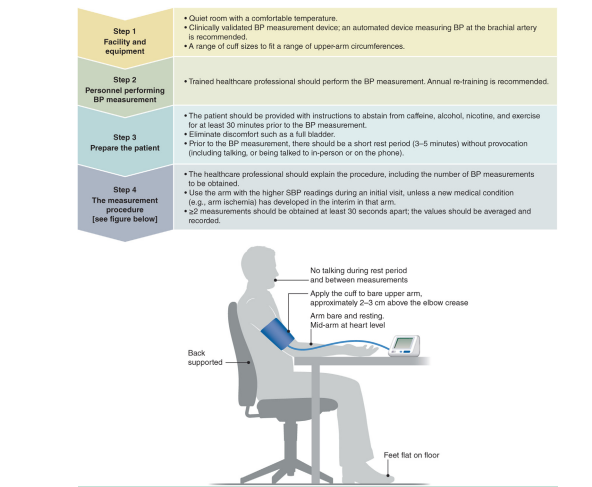
- Environmental Conditions: Measurement should occur in a quiet room, at a comfortable temperature, with the patient seated calmly for at least 5 minutes before the reading [4].
Procedural Standards
- Avoid caffeine, smoking, or exercise for at least 30 minutes before measurement.
- Ensure the bladder is empty.
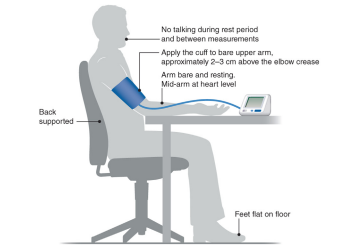
- Sit with feet flat on the floor, back supported, and arm at heart level.
- Take at least two readings, one to two minutes apart, and record the mean value [4].
Clinical Considerations
Special populations—such as pregnant women, children, elderly patients, and those with arrhythmias—require tailored approaches and devices [4]. Clear documentation of measurement conditions and device details ensures data consistency and continuity of care.
6. Comparison Between Traditional and Automated Methods
Traditional (Auscultatory) Method
This classical method uses a mercury or aneroid sphygmomanometer and a stethoscope to detect Korotkoff sounds. It has been the reference standard for decades [11].
Advantages:
- High accuracy in expert hands.
- Less affected by certain motion artifacts.
Limitations:
- Requires trained personnel.
- Susceptible to observer bias and ambient noise.
- Mercury devices are being phased out for environmental reasons.
- Not suitable for self-monitoring [12].
Automated (Oscillometric) Method
Automated devices detect oscillations in the arterial wall during cuff deflation and estimate systolic and diastolic pressures algorithmically [13].
Advantages:
- Reduces observer bias.
- Provides reproducible readings.
- Ideal for home and community monitoring.
- Enables data storage and digital transfer [14].
Limitations:
- Accuracy varies between devices—only validated ones should be used.
- Less accurate in arrhythmias or certain conditions.
- Requires adherence to correct procedure [15].
Emerging technologies, such as cuffless monitors and photoplethysmographic (PPG) sensors, promise non-invasive, continuous monitoring. Early studies show comparable accuracy within 3 mmHg of standard methods under controlled conditions [16], but real-world validation remains ongoing.
Comparison Table: Methods at a Glance
| Feature | Traditional (Auscultatory) | Automated (Oscillometric) | Emerging (Cuffless/PPG) |
|---|---|---|---|
| Observer dependence | High | Low | Low |
| Suitability for home use | Poor | Excellent | Potentially excellent |
| Accuracy (controlled conditions) | High | Comparable when validated | Promising (requires validation) |
| Performance in arrhythmia | Better | Variable | Unknown |
| Data storage/transfer | None | Yes | Yes |
7. Challenges in Implementation
7.1 Resource Limitations
Many low- and middle-income countries lack access to validated devices and trained personnel. The cost of high-quality monitors, calibration services, and appropriately sized cuffs remains a barrier [4,17].
7.2 Training and Compliance
Even in well-resourced hospitals, staff often deviate from proper procedures—measuring BP immediately after activity, failing to support the arm, or using incorrect cuff sizes [18]. Continuous education is vital.
7.3 Device Validation and Maintenance
A large number of BP monitors on the market have not undergone proper validation. Without regular calibration, devices can drift and produce systematically incorrect readings [19].
7.4 Patient-Related Factors
Anxiety, non-adherence to home monitoring, or difficulties handling devices—especially among elderly or disabled patients—reduce accuracy [20]. Special training and supportive technologies can improve patient engagement.
Quick Checklist: Correct Blood Pressure Measurement
| Step | What to do |
|---|---|
| 1 | Ask patient to avoid caffeine, smoking, and exercise for 30 minutes before measurement. |
| 2 | Ensure patient empties bladder and sits quietly for at least 5 minutes. |
| 3 | Seat patient with back supported, feet flat, and arm supported at heart level. |
| 4 | Choose correct cuff size (bladder should encircle ≥80% arm circumference). |
| 5 | Take at least two measurements 1–2 minutes apart and record the mean. |
| 6 | Document device model, cuff size, posture, and conditions. |
8. Recommendations for Practice
To achieve global standardization and improve hypertension control, the following steps are recommended:
- Universal Adoption of Protocols: All healthcare facilities should adhere to standardized BP measurement protocols.
- Access to Validated Devices: Governments and organizations must ensure affordable, validated BP monitors for clinical and community use.
- Training and Certification: Regular competency-based training should be mandatory for healthcare professionals.
- Quality Assurance: Institutions must perform periodic calibration and maintenance of devices.
- Digital Health Integration: Use of mobile health apps, telemonitoring, and reminder systems can enhance patient participation in home BP tracking.
- Tailored Approaches: Adapt protocols for children, pregnant women, elderly, and patients with specific conditions [4,20].
By integrating these strategies, healthcare systems can reduce diagnostic errors, improve hypertension management, and strengthen cardiovascular prevention efforts worldwide.
9. Conclusion
Accurate blood pressure measurement is a cornerstone of effective hypertension management and cardiovascular disease prevention. Despite being a routine procedure, it remains vulnerable to significant errors that can impact diagnosis, treatment, and outcomes.
The standardization of BP measurement—through validated devices, evidence-based procedures, and ongoing quality control—is essential. Automated and standardized methods can achieve accuracy comparable to traditional auscultatory techniques when properly implemented. However, challenges persist, particularly in resource-limited regions.
Collaboration between governments, health professionals, and technology innovators is vital to overcome these barriers. By embedding standardized BP measurement in everyday clinical practice, we can move closer to a world where hypertension is accurately diagnosed, effectively treated, and its devastating consequences substantially reduced.
10. References
- World Health Organization. Hypertension. WHO; 2023.
- Ettehad D, Emdin CA, Kiran A, Anderson SG, Callender T, Emberson J, et al. Blood pressure lowering for prevention of cardiovascular disease and death: a systematic review and meta-analysis. Lancet. 2016;387(10022):957–967.
- Shimbo D, Artinian NT, Basile JN, Krakoff LR, Margolis KL, Rakotz MK, et al. The role of blood pressure measurement accuracy in guideline development and clinical practice. Hypertension. 2020;75(2):258–266.
- KDIGO. 2023 International Consensus Statement on Standardized Blood Pressure Measurement [Internet]. KDIGO; 2023. Available from: https://kdigo.org/wp-content/uploads/2023/05/2023-International-Consensus-Statement-on-Standardized-Blood-Pressure-Measurement.pdf
- Pickering TG, Hall JE, Appel LJ, Falkner BE, Graves J, Hill MN, et al. Recommendations for blood pressure measurement in humans and experimental animals. Hypertension. 2005;45(1):142–161.
- Myers MG, Kaczorowski J, Dawes M, Godwin M. Automated office blood pressure measurement in primary care. Can Fam Physician. 2014;60(2):127–132.
- Parati G, Stergiou G, Asmar R, et al. European Society of Hypertension guidelines for blood pressure monitoring at home. J Hypertens. 2018;36(4):813–838.
- O’Brien E, Atkins N. A comparison of the auscultatory and oscillometric methods of blood pressure measurement. J Hypertens Suppl. 1997;15(2):S3–S10.
- Muntner P, Shimbo D, Carey RM, et al. Measurement of blood pressure in humans: a scientific statement from the American Heart Association. Hypertension. 2019;73(5):e35–e66.
- Acelajado MC, Hughes ZH. Proper blood pressure measurement: practical guidelines for clinicians. Clin Hypertens. 2022;28(1):4.
- Sikorskyi MV, Soroka AO, Mosiychuk VS, Sharpan OB. Comparison of methods of automatic blood pressure measurement in the same device.
- Xuan Y, Fascetti AJ, Barry C, Wang EJ. Development of a one-dollar blood pressure monitor.
- Das M, Choudhary T, Sharma LN, Bhuyan MK. Accelerometric method for cuffless continuous blood pressure measurement.
- Yamazaki Y, Ishii M, Ito T, Hashimoto T. Frailty care robot for elderly and its application for physical and psychological support.
- Cordier MO, Fromont E, Quiniou R. Learning rules from multisource data for cardiac monitoring.